UX/UI Design · Concept · 2025
A music experience built around mood, reflection and intentional listening.
Overview
Music platforms are very good at understanding what we listen to, but not why we're listening.
Metle explores the space between music and emotion — helping people check in with how they feel, listen with intention and reflect on how music affects them over time.
Research
Three findings shaped the direction of the product.
01 — Music already has an emotional role
The opportunity wasn't to create a new behaviour, but to make the emotional relationship already happening through music more intentional and visible.
02 — Support isn't always easy to access
Cost, stigma and accessibility can prevent young people from seeking traditional mental-health support, while music is already familiar and part of everyday life.
03 — Music is support, not treatment
Research suggested music can support mood regulation, stress and emotional expression, but isn't a replacement for professional care.
Support reflection without diagnosing, treating or promising to improve someone's mental health.
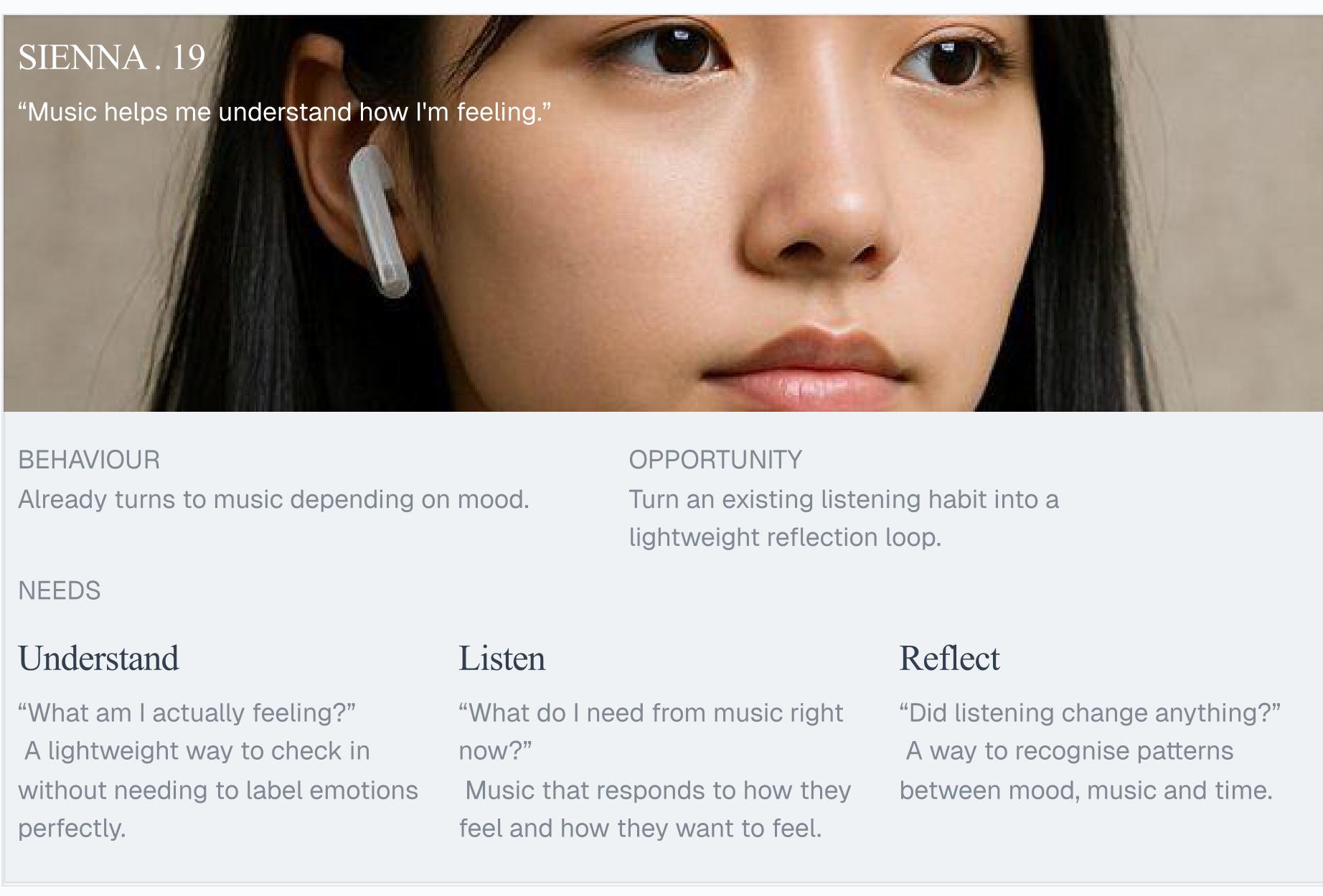
Research showed that young people already use music to regulate mood, process emotions and create a sense of comfort or connection.
My research led me to focus on 15–29 year olds who already use music as part of their everyday emotional lives.
Rather than asking users to adopt a completely new wellbeing behaviour, Metle builds on something many already do — turning to music when they want to change, understand or sit with how they feel.
Reflection
I compared music streaming and wellbeing platforms to understand what each did well and where an opportunity might exist between them.
Discovery algorithms, vast libraries, personalised recommendations, social sharing, and cross-device sync.
Emotional check-ins, intentional listening modes, mood journalling, reflection over time, and mental health framing.
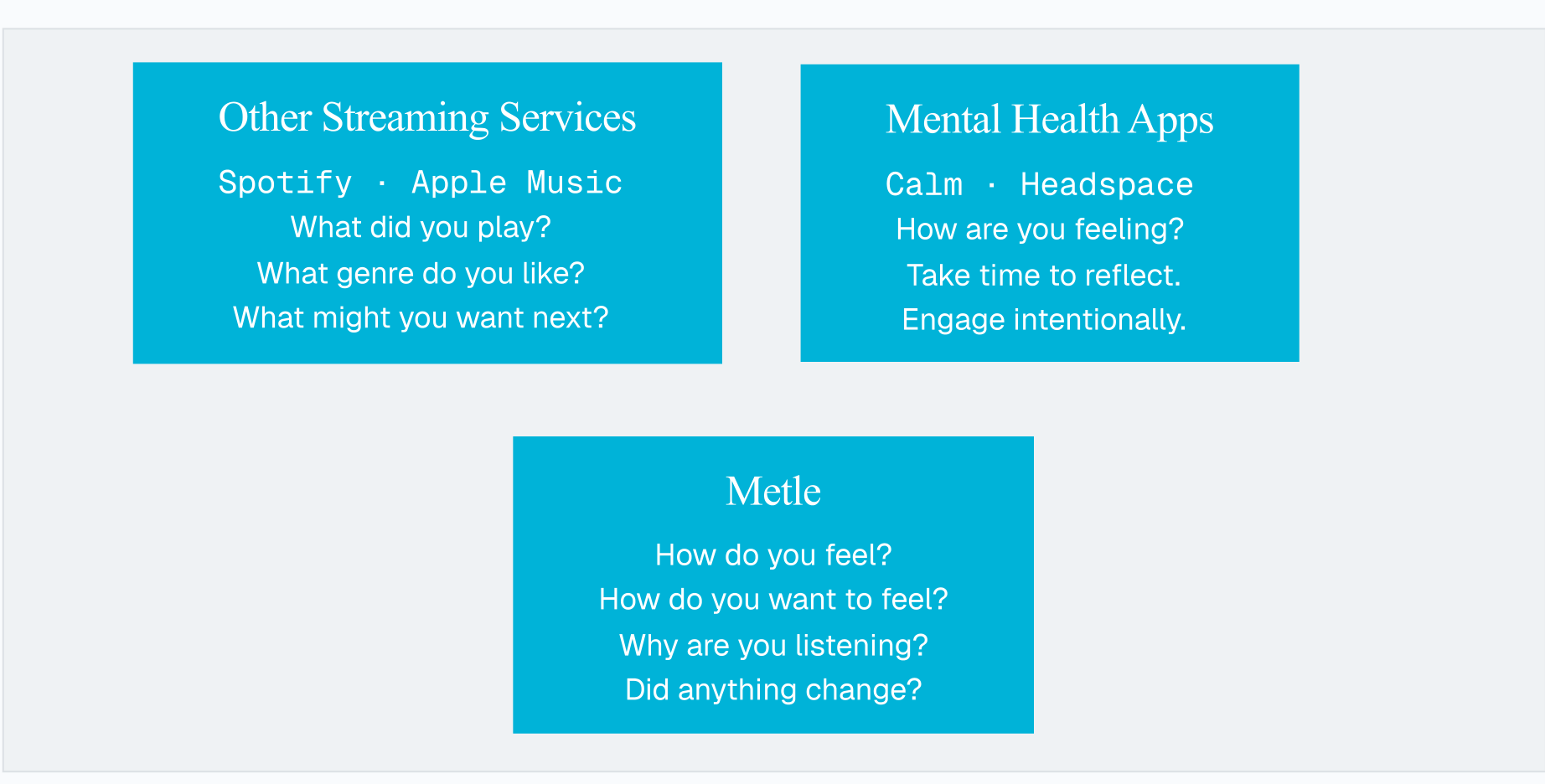
Existing products solve either side of the problem well, but I saw an opportunity in the overlap.
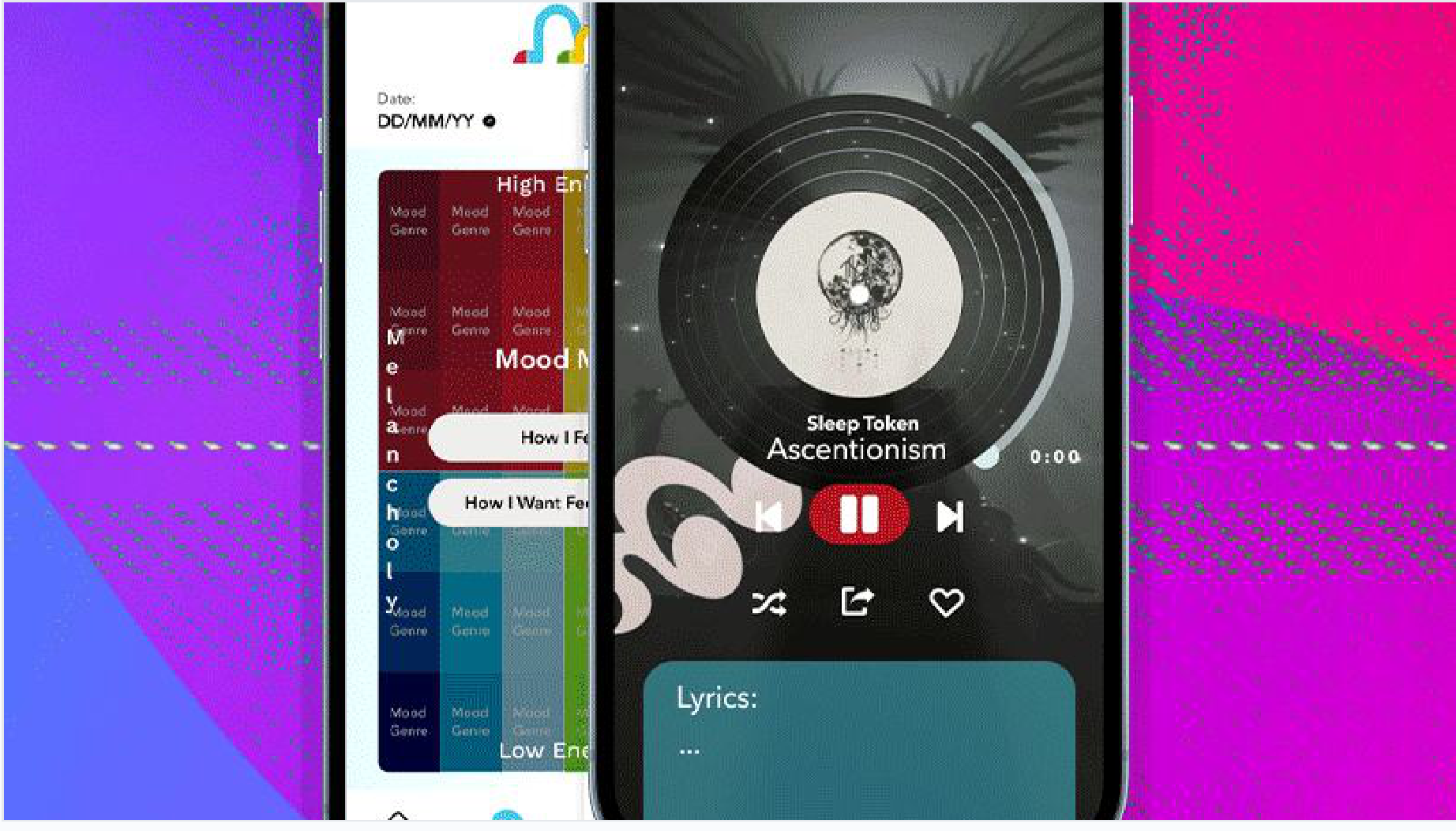
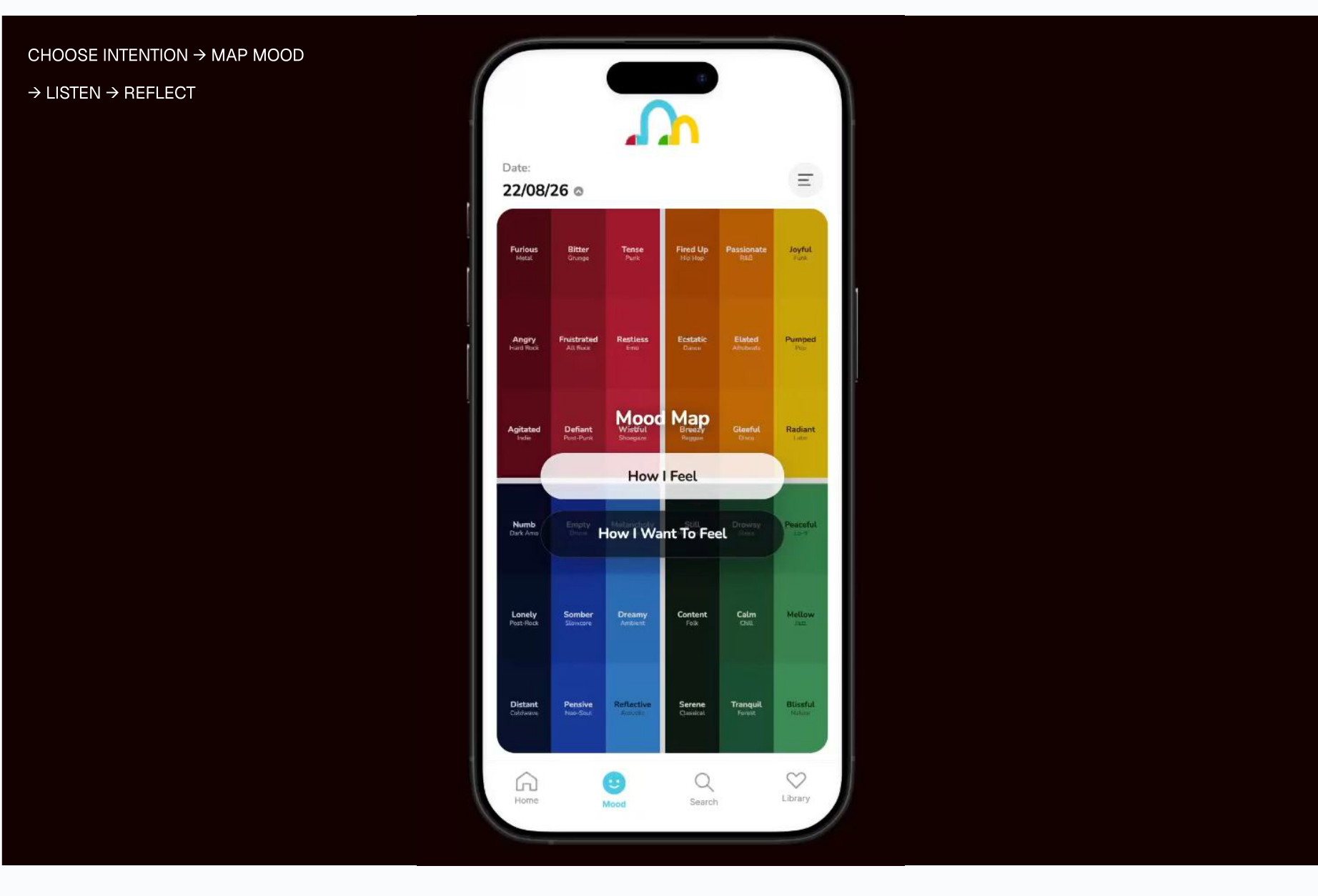
To turn emotion into something users could interact with, I looked at Russell's Circumplex Model of Affect. The model maps emotional states across two dimensions: valence and arousal.
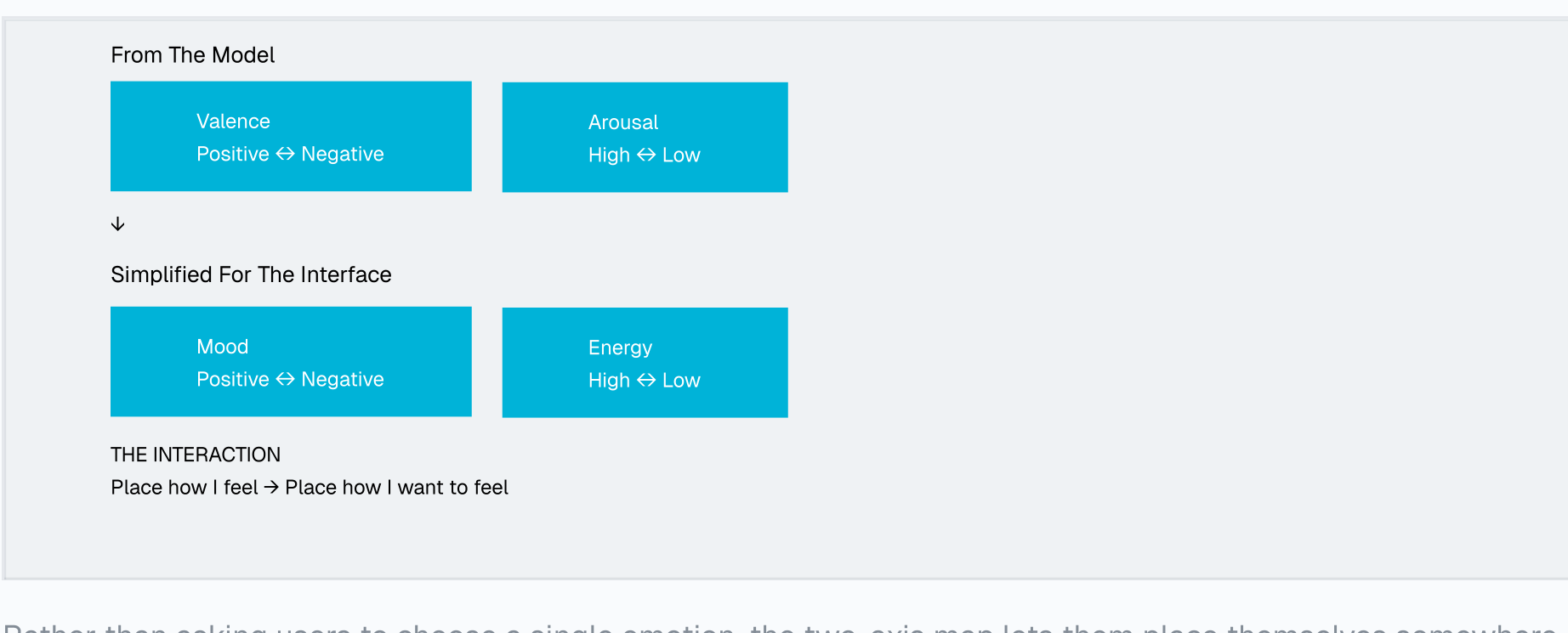
Rather than asking users to choose a single emotion, the two-axis map lets them place themselves somewhere between emotional states.
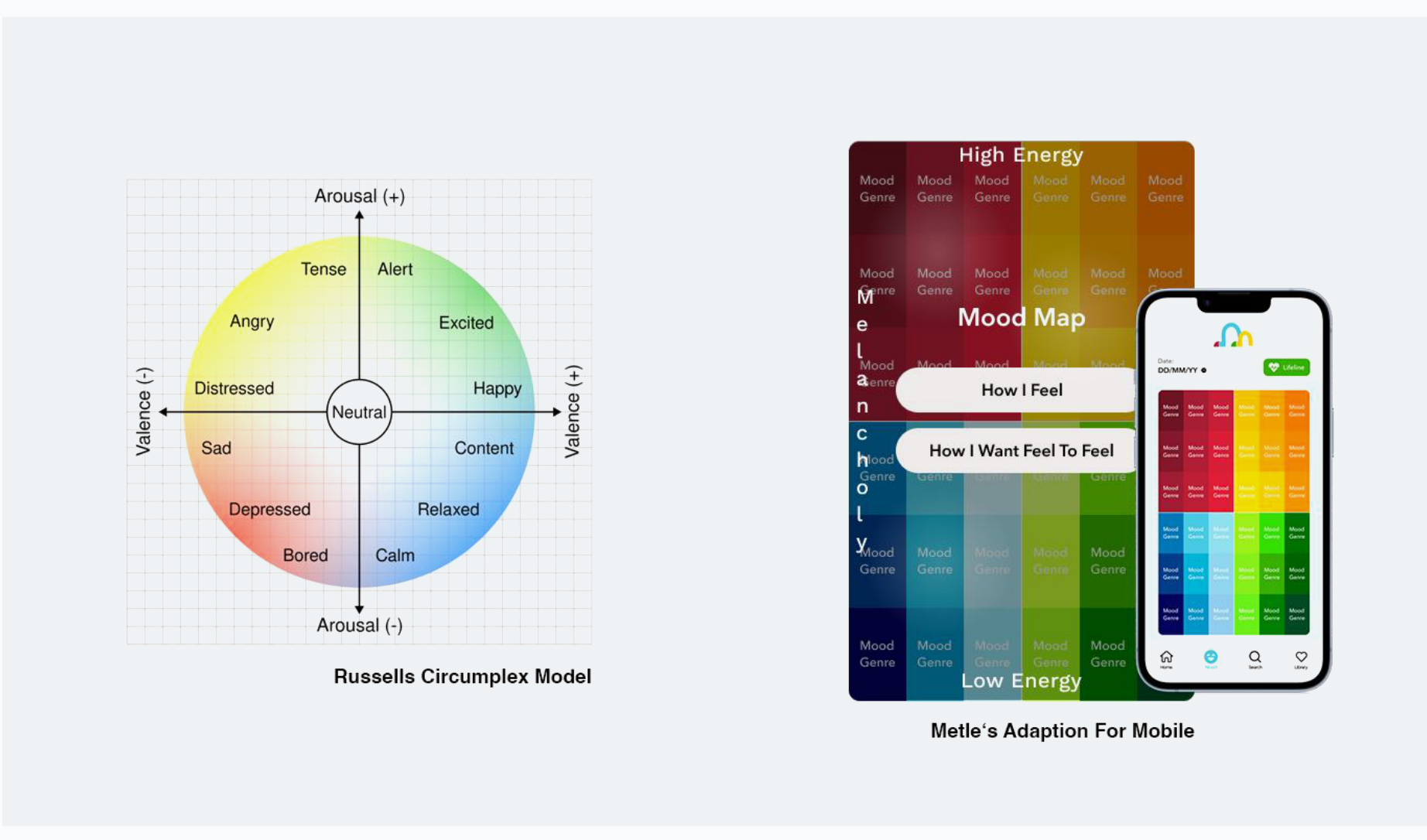
The Mood Map can be used in two ways. Users can choose music that matches how they currently feel, or music aligned with how they want to feel.
This keeps the interaction simple while recognising that people don't always use music for the same reason.
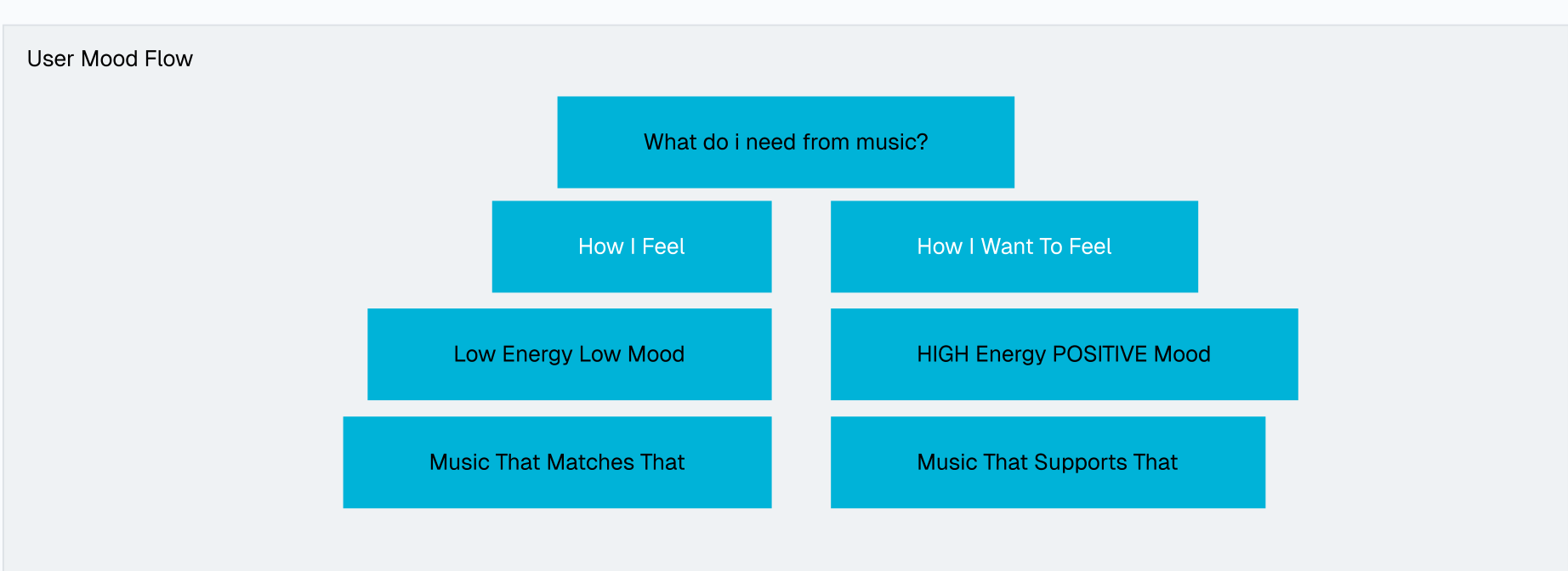
From choosing an intention to reflecting afterwards, the experience was designed as one continuous loop.
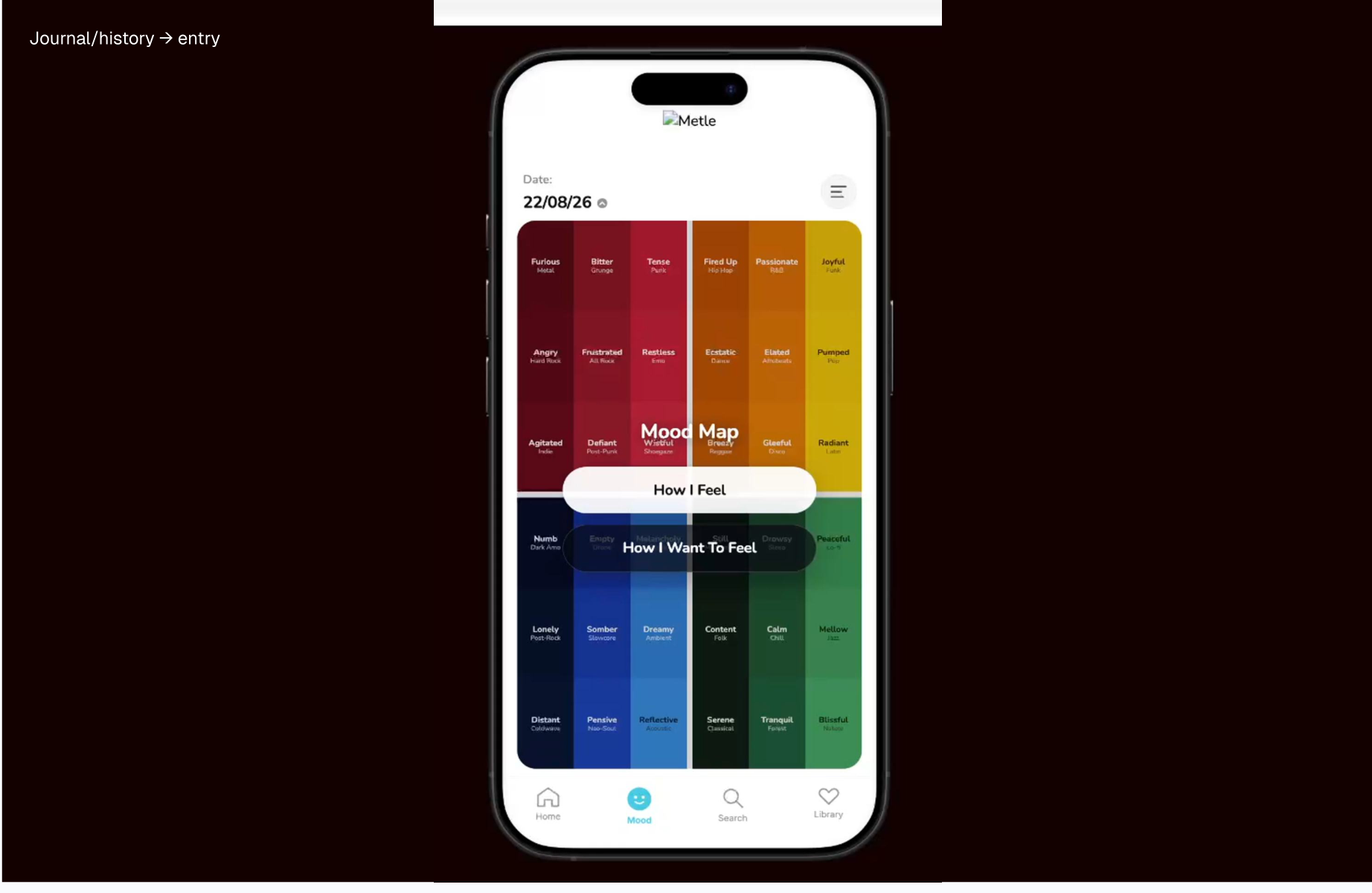
Reflections are saved alongside the user's listening history, allowing them to revisit how they felt, what they listened to and the intention behind the session.
During exploration, I designed Blended — a feature that let users combine genres to discover unexpected music.
I liked the idea, but as the product became more focused, I realised it solved music discovery rather than intentional listening and reflection.
So I removed it.
It was a feature I liked. It just wasn't a feature Metle needed.
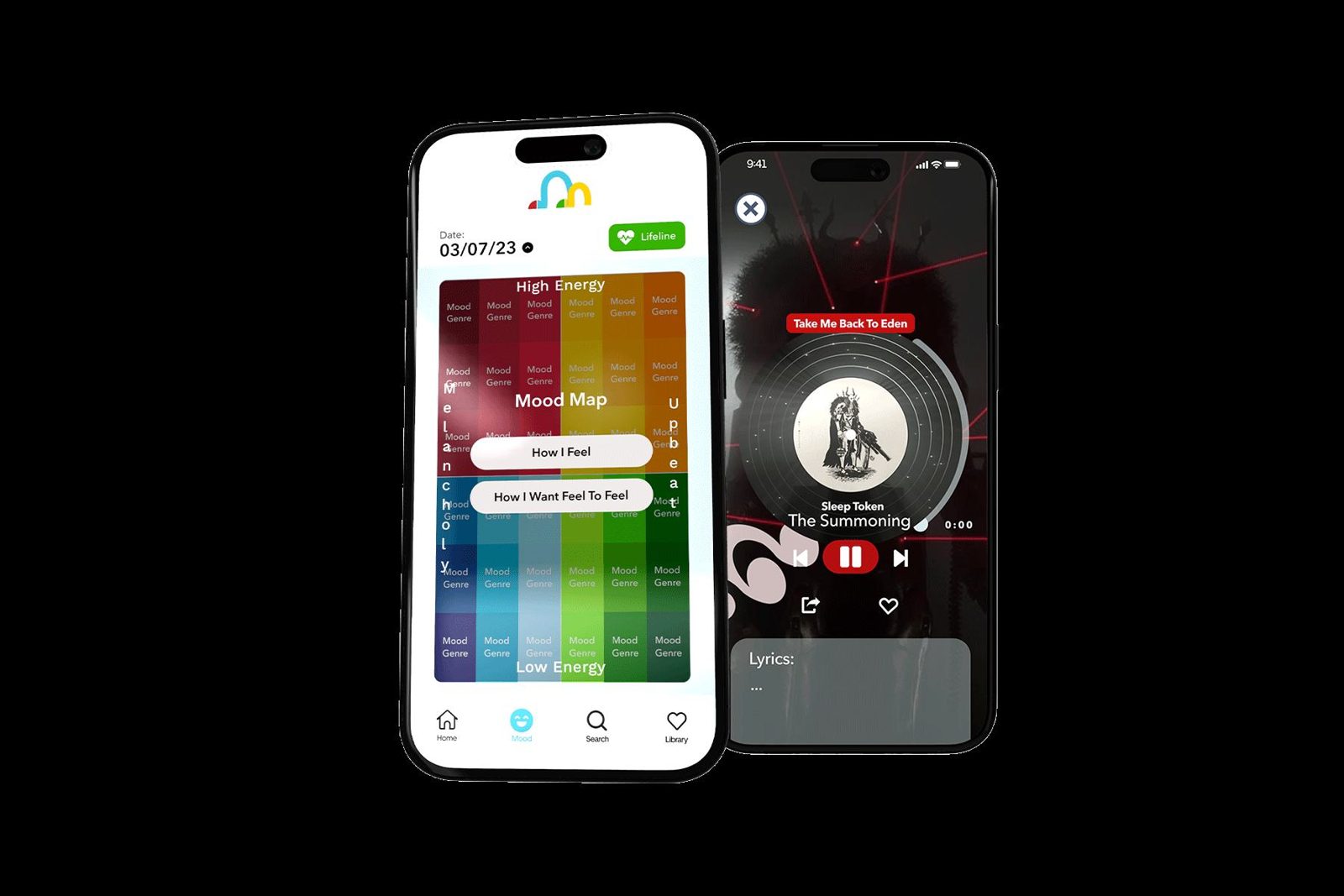
Once the core experience was established, I wanted the music player itself to feel more expressive than a conventional streaming interface.
Inspired by physical music culture, I used the record as the centre of the player — bringing some of the tactility and personality of physical media into the digital experience.
The name combines the project's focus on mental wellbeing with music, while also referencing the genre that initially inspired the idea.
Metle is a research- and framework-led concept, not a usability-tested product. While the Circumplex Model gave the Mood Map a theoretical foundation, the interaction itself still needs validation with real users.
My next step would be testing whether users understand How I Feel / How I Want to Feel, whether Mood × Energy feels intuitive, and whether reflecting after listening feels useful without interrupting the experience.
Reflection
Metle taught me to be more selective with features and more deliberate about connecting research to interaction. The strongest idea wasn't the one with the most functionality — it was the one that gave the product a clear reason to exist.
More Work